Sunday, March 31, 2019

Ecosystems and Fermentation (Week 12)

I think it's safe to say that when you return to your students after three days of being away, there will be adjustments to make. Luckily for me, my students were eager to get back in the swing of things. Despite myself being sick on Monday and Tuesday, having a substitute for the entire day on Tuesday due to Mrs. Cashell-Martin being sick, preparing for two weeks of teaching because of a pageant this weekend, this week was probably my favorite week of teaching.
Image result for adjustment

The week began with most of my classes needing to finish the projects that I had left for them while I was out. Then, it was time to transition into our next units of instruction.

The week was rough to start with myself not feeling so hot on top of adjusting to the students again and the students adjusting to me, but by the middle of the week, I was 80% back in the game and ready to have some pretty awesome and engaging lessons with my students!


Two of my favorites were having my Forestry and Soils classes making ecosystems in a bottle to introduce the forest ecosystems unit. Complete with fish, of course! And my Introductory course was super engaged on Friday with an activity demonstrating the fermentation process in the rumen of a ruminant animal!

Image result for activated yeast in a water bottle

I am finally starting to recognize what works for each of my classes and how to get them engaged and keep them engaged throughout the entire lesson. I can finally recognize when they are lost or not understanding and figure out how to reword it or connect tehe dots so that I see that light bulb go off in their heads. While I have figured out a lot this week, there is always still learning to do!

So, some questions for my readers:
1. What suggestions do you have for keeping students on topic when conducting a lab experiment or activity? How do you acknowledge the connections that they are making, but also cut the conversations that are off topic.

2. What suggestions do you have for having live animals in your classroom? The students created these ecosystems, should they be responsible for the upkeep of these animals? Do you allow students to take these types of things home? What criteria/stipulations do you include if you do allow them to take the animals home?

3. Where have you found some awesome activities for your students to complete while other students are in the shop? We have three welding booths and 9 students in the class. I hate to have them all complete bookwork while they are not in the shop.



Saturday, March 23, 2019

Charm City-Week 11

Week 11 has come and gone, and I have only spent two days of the week in my program.
You may ask- why?

The reason being, the last three days of the week, I travelled back into the Keystone State and up to Happy Valley for the first ever, Spring Retreat while student teaching.
Image result for happy valley penn state

The three days began with presentation of the Project Learning Tree lessons that we had piloted with our students at our cooperating center. This experience allowed me to get a look into what my colleagues were teaching and how they were able to adapt and modify some of the PLT lessons for their students.

The day wrapped up with a financial literacy workshop by Dr. Curry, which by the way, is a lot harder than it seems! Finally, we were loading up the vans and headed to Charm City.

Charm City, also known as Baltimore, MD.


Image result for charm city
Charm City has an incredibly interesting take on agricultural education. While in Baltimore, we were able to see two different charter schools which utilize agricultural education for various ages, and a non-formal agricultural education site that caters to younger students within the Baltimore area.

Image result for green street academy baltimore
Baltimore is an urban area, with a lot to learn. Students are engaged in what agriculture has to offer them, but also don't always have a safe space to go home to at the end of the day. I enjoyed my time in Charm City, learning how to increase student engagement, and take a look at how agricultural education can be modified for younger age groups.


Week 11 realizations:
1. You don't know what each student is going through every day.
2. You're never going to be a perfect educator, but you can try your hardest and grow each and every day.
3. Students need a safe place to call home, be that person.

Questions:
1. How do you gauge student's willingness to engage throughout the day? How do you address students who are tired because they may have some family issues that required them to stay up last last night, or not be able to grab breakfast in the morning?
2. What are some tips and tricks that you have found successful to show students that you care and give them that safe space that they so desperately need?

Image result for maslow's hierarchy

Sunday, March 17, 2019

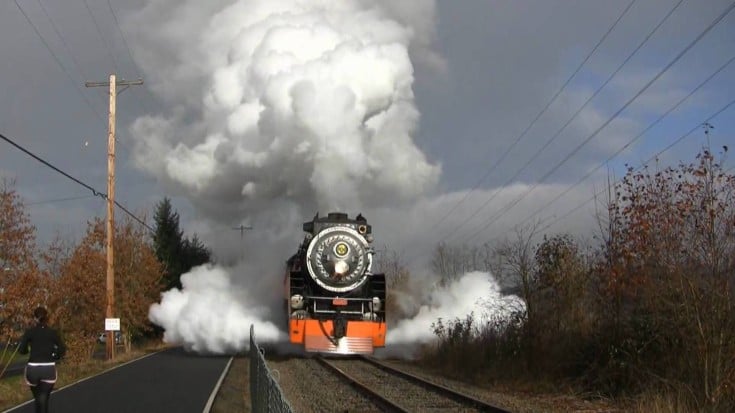
Full Steam Ahead- Week 10

Choo Choo.
Full steam ahead.
Image result for train blowing steam

Week 10 has come and gone with what feels like the blink of an eye. I have picked up my last class totally a full load of 5 classes for the last 5 weeks of my internship. The more time that I spend with my students, immersed in the content that is agriculture education, the more I fall in love with the students and the content.

This week was full of recognizing when things went wrong, how to fix them, and also celebrating the wins.  I was able to serve as the FFA advisor for a chapter meeting which gave me butterflies thinking about one day leading a chapter of my own.
"Here by the owl," will forever hold a special place in my heart.
Image result for owl cartoon

Perks of this week:
1. Full load of classes, bell to bell instruction EVERY day
2. Organization!
3. Creating quality alternative assignments
4. Planting 7-800 plants in one day
5. Feeling confident in my teaching instruction and activities
Image result for bell to bell instruction

Questions that I have:
1. I am currently struggling to come up with activities for my forestry and soils class. We are transitioning from a forestry management unit to a forest ecosystems unit. What suggestions or advice do you have for making this class more interactive and engaging?

2. Classroom management- the last class of the day. I struggle with keeping the attention of students at the end of the school day. Sometimes they finish their ticket out question prior to the bell ringing and think that it is okay to get up and line up at the door or go chat with friends. I have addressed the issue a few times. What is something that I can do to ensure that students are remaining in their seats until the bell rings AND I dismiss them for the day?

3. Cell phones. School policy states that cell phones, head phones and hoods are not to be on/out during class. The school has not been very consistant with the consequences for having these items out. How can I enforce these rules in my classroom?


Friday, March 8, 2019

Begin with the end in mind (Week 9)

This week has been challenging.
I'm not afraid to admit that.
I just picked up my fourth class and will pick up my final class on Monday.

Transitioning content from day to day has been a struggle. I know the content that I want to teach for the day and how it all flows together, but then connecting it all to the unit as a whole has been a struggle.

I seem to have lost sight of keeping the end in mind.

Image result for begin with the end in mind

What I need to remember is that you will have bad days and bad weeks, but that doesn't mean that you are having a bad life. That doesn't mean that you are a bad teacher. That doesn't mean that you're a failure.

Image result for bad day not a bad lifeWhat I've also learned is that asking for help- again, is not a bad thing. If you are struggling, you NEED to ask for help. You are not being judged, or ridiculed, you just need to ask for help especially in areas that you may not be 100% confident in.

The shining moment of this week is that on Thursday, we had 5 public speakers, and an agricultural mechanics team compete at the regional level. I am proud of our members who placed incredibly high in both areas. We had 1st place creed speaker, 1st place prepared public speakers, and a  3rd place extemporaneous public speaker.

Our Agricultural Mechanics team placed first in the region with members placing 1st, 3rd, 6th, and 7th place!


What I'm trying to say is that no matter how your day or week has been, there is always a bright side. At the end of the day, if you've taught students one thing, then you've done your job. Bad day not a bad life.
Image result for teaching quotes

Questions:
1. My intro to ag students have no desire to learn about FFA or what FFA is- many of them do not want to go to college and/or have no interest in agriculture. How do I gain their attention and make them see the benefit that the National FFA Organization has to offer them?

2. Forestry and Soils is an incredibly challenging class for me, any advice on how to make this class more engaging or ideas of where to get resources for lessons would be greatly appreciated.


Sunday, March 3, 2019

Never a dull moment (Week 8)

Finally a week full of classes without delays or cancellations... at least that's how the week started.

Monday-Thursday came and went.. to say that it was exhausting both for the students and myself is an understatement.

Friday rolls around and I wake up to a two hour delay.. Happy Birthday to me. Two hour delay on a Friday after a long week... of course the students were ready to get out of there by the time 3:30 rolled around.

But this week was also full of exciting moments, which as an ag teacher is literally all the time!

With the beginning of the month, came a new newsletter that parents receive highlighting what their students have accomplished throughout the past month.

This week was the first week that I really implemented my consequences and reviewed them with students. 

What I've learned through this experience of implementing consequences a little too late in the game are the following: 
1. When you create expectations, procedures and consequences, stick to them! 
2. The honeymoon phase of how great high school kids are will fade. They will begin to test you and push your buttons. 
3. When you implement consequences, make sure that you are consistent and equal. Keep your eyes peeled at all times and don't be afraid to pull a student aside and discuss their behavior with them. 
4. A one on one conversation goes a LONG way with high school students. 

Questions that I have: 

1. I have recently been struggling with transitions between welcoming students, bellwork, and just transitioning between activities. What are some suggestions that you have for making these transitions smoother? 

2. Throughout the next few weeks, the greenhouse will be in full swing and our new greenhouse should be ready for use. Until then, we have a TON of plants that will need planted. Sometimes, we may have to pull a second class other than greenhouse to help mix soil so that we can get all plants planted in a timely fashion. What suggestions do you have for gaining motivation for students who may not be in the greenhouse class?
Image result for transitions

Sunday, February 24, 2019

Opportunities of a Lifetime (Week 7)

Blue and Gold everywhere.

Students engaged in conversation regarding what the theme for each day of FFA week will be. Whether it's blue and gold day, battle of the brands, official dress, or flannel Friday. 

FFA week has always been something that I've been incredibly passionate about. I mean, HELLO- school spirit/ club spirit has always kind of been my thing! 


When I was an FFA member in high school, the only time that I ever saw the state officers was at state convention in June, and the only time that I saw National FFA officers was when I was in Kentucky for National FFA Convention. 

This week, I was able to get the opportunity of a lifetime to meet a National FFA officer, and interact with State FFA officers. Seeing the work that both of these incredibly special young men and women were able to do in the classroom promoting agriculture and agricultural education was phenomenal and gave me a new found love for this organization. 
I hope that the students who were able to participate in the workshops by the National FFA Officer and State FFA Officers saw the impact the FFA can make in their lives and that it truly is not just plows, sows, and cows, but so much more about teamwork and leadership. 

Questions that I have: 
1. How do you discuss respect and expectations after a visitor has left? (Students were reminded of the expectations prior to the visit) 
2. What suggestions do you have for facilitating and managing a classroom when a visitor is in the room?
3. How do you assure that you are not "stepping on toes" when a visitor is in the room and you recognize that the class may have started to check out?

Saturday, February 16, 2019

Jack of All Trades (Week 6)

This week- was crazy and I found myself wearing many different hats. But to start, this was my week:
Monday- Snow Day 
Tuesday- Snow Day 
Wednesday- Full Day
Thursday- Full Day
Friday- Full Day for students, I got to catch up with my cohort! 
Snow days. 
This past week, I was on the hate end of that love hate relationship. I planned so hard for the entire week, expecting to be in school for 4 full days. My dreams were crushed when I awoke on Monday morning to a snow day text message, and another one on Tuesday. So, how did I overcome and become flexible? 
Well, I rearranged some lessons, consolidated some activities, and all was well. 

Teacher/Volunteer: 
Wednesday we were back in the classroom and I only had two days with my students. In these two days, I knew that I needed to get a lot done. Both content wise and just in general. We ended up losing a little bit more time because I chose to volunteer my time and my students time to help Mrs. Cashell-Martin with the Valentine's Day Rose Sale. Roses, filler flower, and greenery still needed to be boxed and labeled for customers to pick up on Wednesday and Thursday.
Image result for valentines day


Fundraiser:
In addition to the classwork that needed to be completed, I was also in charge of the strawberry sale fundraiser that our members were participating in. Those forms were due on Friday, however, we still have some rolling in. 

Teacher: 
Thursday,  my students were really engaged and excited for the lessons. I was able to get my Power Mechanics students out into the shop doing some hands on projects with concrete. My introduction to Ag students were excited to have a special visitor to help them review the content that we have covered thus far. (Taylor, my ex service dog in training)


What I've learned throughout this week: 
-Agriculture Educators truly are a jack of all trades, between fundraisers, classwork, FFA meetings, etc., this job is NOT a 9-5 and quite frankly, I'm okay with that!
-Students need reminders. Although you have told them multiple times when the fundraiser paper is due, they need a reminder at least two days back to back prior to the form being due. 
-Flexibility is key, it will keep you from going insane 
-Remember who needs to work hard planning (you, as the Ag. Educator) and who needs to work just as hard in the classroom (your students)
-You need to know more than just scratching the surface on content (one day ahead of your students)

Questions that I have: 
-How can I increase content knowledge? I have begun reading the textbooks and really doing research, but is there a better way to gain content knowledge?
-As I prepare to pick up my 4th of 5 classes during this experience, what are some organizational strategies that I could use to keep the classes content separate in my mind? How do I remember what content I'm teaching to what class and how do I quickly transition my brain to the next class period? 
-Domestic animals (dogs) in the classroom- how do you handle this situation? (I brought my dog in to review pet ownership and basic grooming) What are some strategies to limit the distraction that a live animal may bring into the classroom?

Stay tuned for all the craziness that is National FFA Week!