Monday, April 15, 2019

Science Classroom Visit

I recently had the pleasure of observing an Anatomy and Physiology class at Boonsboro High School.


The class consisted of a lab that allowed students to test their
strength, grip, and fatigue.

The objectives for the class were:
-Measure and compare grip strength of your right and left hands
-Correlate grip strength with gender and certain physical characteristics
-Compare the pinch strength of the individual fingers of the dominant hand
Image result for labquest


Interest Level/Why:
-Students engaged in the content, new technology that they have not used before
-Interested in which hand was stronger and why the dominant hand is weaker than non-dominant hand

Teaching Methods:
-Inquiry, students were walking themselves through the lab given directions

The teacher did an excellent job at having students think for themselves. Students were given a direction sheet and informed that it was their responsibility to complete the lab packet with their group members. The teacher was facilitating the classroom and not giving away information.


BECOV:
Business-like behavior: Creates a sense of urgency, engages in student behaviors
Enthusiasm: Engages in student labs
Clarity: Clarifies instructions to student
Variability: Students engaged in lab entire class period, doing both grip strength and pinch strength
With-it-ness: Incredible wealth of content knowledge, being able to explain the lesson to students and other faculty who enter the room, asking questions and answering questions as they arise.
Learner Centered-ness: Teacher facilitating learning, students

Other Comments:

Teacher did not interact with students throughout the class as far as feeding information, students were engaged in lab activity the entire time, students are taking this course to serve as a college credit for HCC

Image result for hagerstown community college

Sunday, April 14, 2019

You are more. (Week 14)

Week 14.

One more week until this experience comes to a close, and let me tell you- it has flown by.

The days seem to be going so much quicker and in return, so do the weeks.

No matter how quickly your time goes, you always need to keep in mind that you are in control of how you spend that time. Whether you spend it trying to make connections with your students or just passing through checking off the assignments, you are in control.

Image result for time flies

What you may not realize is that you may think that you are JUST a student teacher, JUST a temporary part of the program, JUST a small part in the lives of your students, but let me tell you- You are SO much more.

This week, as I began to hand back two of my classes, I was able to see the impact that I have made on some of these students. The ones who you may think will never like you, end up showing the most emotion when you break the news that you are leaving in just a few short days.

Don't underestimate your role in the lives of your students, the lives of the program you are in, and the lives of the community members that you have interacted with. Because you are so much more than just a face to them.

When you attend your last FFA meeting and an officer is looking down in the dumps, go and comfort her, ask what's wrong and how you can help.

When a student comes to you upset about a family concern, put down the textbook and listen.

When students are affected by the tragic accident that another student has recently been in, take the time to check in and comfort them.

Because you may be the only person that student has to vent to.
Image result for teacher heart

You are so much more than you realize.

Embrace every moment of this experience, be present.

Don't take a single day for granted, because at the end of this experience, you may not ever see these students again, but I can guarantee you that you have left an impression.

Because you are more.

Image result for you are more

Sunday, April 7, 2019

Facilitate more, talk less (Week 13)

This week, I learned a valuable lesson. The more you talk, the more students get confused.
The more you facilitate, the more they retain. As teachers, we should be facilitating the learning and promoting more critical thinking from our students. I have learned that the more that I talk and try to explain things to my students, the more confused they get. Whereas, if I give them instructions and a brief description, they are more likely to think critically and figure things out in the best way for them. That is not to say that we shouldn't lecture sometimes, because sometimes that the only way to get to our students, but we should be learning with our students and always remain one day ahead of them.

Image result for think more talk less
I have found that when I let my students think for themselves instead of spoonfeeding them information, they tend to retain more information and put it to practical use.

I have also learned that class time is valuable, if you are not coming in prepared each and every day and creating a sense of urgency for your students, you will never accomplish what needs to be done. Because students model what you are teaching.
Image result for sense of urgency
And last, but certainly not least. I continually come back to the realization that asking questions is not a bad thing. As a child, I was constantly picked on for being "dumb" or not knowing "enough", so I continually try to figure things out on my own. However, asking questions is the only way that you can get through this crazy thing called life, and it's okay to ask questions or ask for clarification.
Image result for ask questions
This week has been packed full with many realizations, some awesome interactions with students, some good conversations with my cooperating teacher, and a little bit of stress as well. In this road that we're travelling, it's always important to keep the "why" in mind and continue to grow each and every day.

Key Questions this week:
1. What is the best method for dealing with students who are defiant?
2. How do you leave at the end of this experience after making these awesome connections with students? How would you recommend spending your final few days with students?
3. As I continue on my teach ag journey, what are some of the best ways to gain content knowledge in addition to reading the textbooks?

Sunday, March 31, 2019

Ecosystems and Fermentation (Week 12)

I think it's safe to say that when you return to your students after three days of being away, there will be adjustments to make. Luckily for me, my students were eager to get back in the swing of things. Despite myself being sick on Monday and Tuesday, having a substitute for the entire day on Tuesday due to Mrs. Cashell-Martin being sick, preparing for two weeks of teaching because of a pageant this weekend, this week was probably my favorite week of teaching.
Image result for adjustment

The week began with most of my classes needing to finish the projects that I had left for them while I was out. Then, it was time to transition into our next units of instruction.

The week was rough to start with myself not feeling so hot on top of adjusting to the students again and the students adjusting to me, but by the middle of the week, I was 80% back in the game and ready to have some pretty awesome and engaging lessons with my students!

Two of my favorites were having my Forestry and Soils classes making ecosystems in a bottle to introduce the forest ecosystems unit. Complete with fish, of course! And my Introductory course was super engaged on Friday with an activity demonstrating the fermentation process in the rumen of a ruminant animal!

Image result for activated yeast in a water bottle

I am finally starting to recognize what works for each of my classes and how to get them engaged and keep them engaged throughout the entire lesson. I can finally recognize when they are lost or not understanding and figure out how to reword it or connect tehe dots so that I see that light bulb go off in their heads. While I have figured out a lot this week, there is always still learning to do!

So, some questions for my readers:
1. What suggestions do you have for keeping students on topic when conducting a lab experiment or activity? How do you acknowledge the connections that they are making, but also cut the conversations that are off topic.

2. What suggestions do you have for having live animals in your classroom? The students created these ecosystems, should they be responsible for the upkeep of these animals? Do you allow students to take these types of things home? What criteria/stipulations do you include if you do allow them to take the animals home?

3. Where have you found some awesome activities for your students to complete while other students are in the shop? We have three welding booths and 9 students in the class. I hate to have them all complete bookwork while they are not in the shop.


Saturday, March 23, 2019

Charm City-Week 11

Week 11 has come and gone, and I have only spent two days of the week in my program.
You may ask- why?

The reason being, the last three days of the week, I travelled back into the Keystone State and up to Happy Valley for the first ever, Spring Retreat while student teaching.
Image result for happy valley penn state

The three days began with presentation of the Project Learning Tree lessons that we had piloted with our students at our cooperating center. This experience allowed me to get a look into what my colleagues were teaching and how they were able to adapt and modify some of the PLT lessons for their students.

The day wrapped up with a financial literacy workshop by Dr. Curry, which by the way, is a lot harder than it seems! Finally, we were loading up the vans and headed to Charm City.

Charm City, also known as Baltimore, MD.


Image result for charm city
Charm City has an incredibly interesting take on agricultural education. While in Baltimore, we were able to see two different charter schools which utilize agricultural education for various ages, and a non-formal agricultural education site that caters to younger students within the Baltimore area.

Image result for green street academy baltimore
Baltimore is an urban area, with a lot to learn. Students are engaged in what agriculture has to offer them, but also don't always have a safe space to go home to at the end of the day. I enjoyed my time in Charm City, learning how to increase student engagement, and take a look at how agricultural education can be modified for younger age groups.


Week 11 realizations:
1. You don't know what each student is going through every day.
2. You're never going to be a perfect educator, but you can try your hardest and grow each and every day.
3. Students need a safe place to call home, be that person.

Questions:
1. How do you gauge student's willingness to engage throughout the day? How do you address students who are tired because they may have some family issues that required them to stay up last last night, or not be able to grab breakfast in the morning?
2. What are some tips and tricks that you have found successful to show students that you care and give them that safe space that they so desperately need?

Image result for maslow's hierarchy

Sunday, March 17, 2019

Full Steam Ahead- Week 10

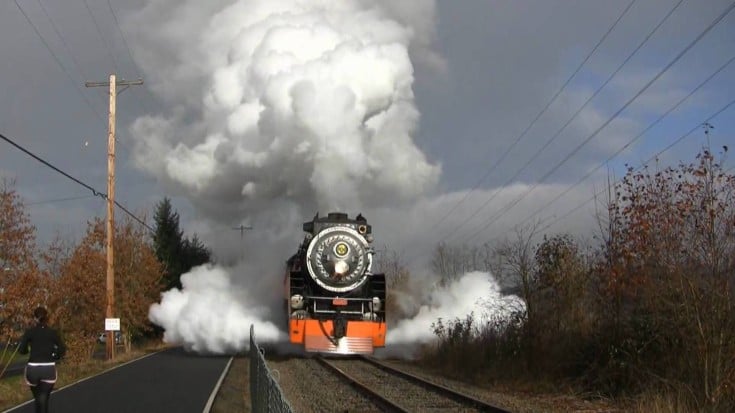
Choo Choo.
Full steam ahead.
Image result for train blowing steam

Week 10 has come and gone with what feels like the blink of an eye. I have picked up my last class totally a full load of 5 classes for the last 5 weeks of my internship. The more time that I spend with my students, immersed in the content that is agriculture education, the more I fall in love with the students and the content.

This week was full of recognizing when things went wrong, how to fix them, and also celebrating the wins.  I was able to serve as the FFA advisor for a chapter meeting which gave me butterflies thinking about one day leading a chapter of my own.
"Here by the owl," will forever hold a special place in my heart.
Image result for owl cartoon

Perks of this week:
1. Full load of classes, bell to bell instruction EVERY day
2. Organization!
3. Creating quality alternative assignments
4. Planting 7-800 plants in one day
5. Feeling confident in my teaching instruction and activities
Image result for bell to bell instruction

Questions that I have:
1. I am currently struggling to come up with activities for my forestry and soils class. We are transitioning from a forestry management unit to a forest ecosystems unit. What suggestions or advice do you have for making this class more interactive and engaging?

2. Classroom management- the last class of the day. I struggle with keeping the attention of students at the end of the school day. Sometimes they finish their ticket out question prior to the bell ringing and think that it is okay to get up and line up at the door or go chat with friends. I have addressed the issue a few times. What is something that I can do to ensure that students are remaining in their seats until the bell rings AND I dismiss them for the day?

3. Cell phones. School policy states that cell phones, head phones and hoods are not to be on/out during class. The school has not been very consistant with the consequences for having these items out. How can I enforce these rules in my classroom?


Friday, March 8, 2019

Begin with the end in mind (Week 9)

This week has been challenging.
I'm not afraid to admit that.
I just picked up my fourth class and will pick up my final class on Monday.

Transitioning content from day to day has been a struggle. I know the content that I want to teach for the day and how it all flows together, but then connecting it all to the unit as a whole has been a struggle.

I seem to have lost sight of keeping the end in mind.

Image result for begin with the end in mind

What I need to remember is that you will have bad days and bad weeks, but that doesn't mean that you are having a bad life. That doesn't mean that you are a bad teacher. That doesn't mean that you're a failure.

Image result for bad day not a bad lifeWhat I've also learned is that asking for help- again, is not a bad thing. If you are struggling, you NEED to ask for help. You are not being judged, or ridiculed, you just need to ask for help especially in areas that you may not be 100% confident in.

The shining moment of this week is that on Thursday, we had 5 public speakers, and an agricultural mechanics team compete at the regional level. I am proud of our members who placed incredibly high in both areas. We had 1st place creed speaker, 1st place prepared public speakers, and a  3rd place extemporaneous public speaker.

Our Agricultural Mechanics team placed first in the region with members placing 1st, 3rd, 6th, and 7th place!


What I'm trying to say is that no matter how your day or week has been, there is always a bright side. At the end of the day, if you've taught students one thing, then you've done your job. Bad day not a bad life.
Image result for teaching quotes

Questions:
1. My intro to ag students have no desire to learn about FFA or what FFA is- many of them do not want to go to college and/or have no interest in agriculture. How do I gain their attention and make them see the benefit that the National FFA Organization has to offer them?

2. Forestry and Soils is an incredibly challenging class for me, any advice on how to make this class more engaging or ideas of where to get resources for lessons would be greatly appreciated.