
Thursday, September 6, 2018
Boonsboro High School Agriculture Program!
Check out my video of my cooperating center: Boonsboro High School in Boonsboro, Maryland!

SAE Visits/ Washington County Ag Expo and Fair

On Tuesday, July 17, I was able to travel to Maryland to attend the Washington County Agriculture Expo and Fair. This event is the main event that students participate in with their SAE projects from Boonsboro High School. Unfortunately, due to the nature of the fairs being so early in Maryland, I was unable to attend a traditional SAE visit. However, I was able to connect with our retired chapter President at the Agricultural Expo and Fair to discuss her SAE project with her dairy cow. I learned through this SAE visit that she is incredibly passionate about the dairy industry and enjoys showing her jerseys at the expo and fair each year. Ms. Cashell went over some questions that she would generally ask during an SAE visit and also provided me with a prompt that I have seen other agricultural educa tors in Pennsylvania use throughout their SAE visits. However, Ms. Cashell uses an approach that I admire by allowing students to take responsibility for their SAE projects and explaining their projects instead of prompting with questions. The question sheet that I was shown is only used if students are a lull in conversation and are unsure of what to say next. Our retired chapter president was incredibly insightful in explaining to me how she cares for her cows and what she does to prepare them for the show at the Ag Expo and Fair since I have never been involved with that process. Unfortunately, I was unable to stay to watch her show her dairy cows, but was incredibly thankful for her insights and detailed explanations that she was able to give me regarding her SAE project.
 tors in Pennsylvania use throughout their SAE visits. However, Ms. Cashell uses an approach that I admire by allowing students to take responsibility for their SAE projects and explaining their projects instead of prompting with questions. The question sheet that I was shown is only used if students are a lull in conversation and are unsure of what to say next. Our retired chapter president was incredibly insightful in explaining to me how she cares for her cows and what she does to prepare them for the show at the Ag Expo and Fair since I have never been involved with that process. Unfortunately, I was unable to stay to watch her show her dairy cows, but was incredibly thankful for her insights and detailed explanations that she was able to give me regarding her SAE project.
While attending the Ag Expo and Fair, I was also able to attend a portion of officer training for the new officer team. I was able to help them scoop ice cream at the fair as well as participate in some team building activities. The team created t-shirts with sticky notes to one another describing things that they admired about the other team member and something that the other members of the team should know about them- such as needing space from one another every once in awhile. I was able to participate in a minute to win it challenge with them where they had to pick up an M&M with a straw and place it on top of another straw across the pavilion. I really enjoyed these team building activities which included working together, sharing admirations and struggles with one another, as well as having a little bit of a competitive side to them!


I was so excited to attend the Washington County Ag Expo and Fair- almost to the point that I did not want to leave!
I cannot wait to begin my student teaching journey at Boonsboro High School in the Spring of 2019!
Monday, September 3, 2018
Week 3: Planning and Learners
This week, we will discuss the essential question: What is a plan and who are our learners?

Some of the key questions that we will address include the following:
1. How do we plan for instruction?
Planning for instruction is best when the end is in mind. Lesson plans should always begin with the objectives in mind. If you begin lesson planning by scheduling fun activities without an objective in mind, you will be focusing more on the art side of teaching rather than the science side of teaching. Every teachers must first begin with the science side/technical side in order to get to the creative/artsy side. Without objectives, our lessons would not make sense and our learners would be confused.
While planning lessons, you should also include checks for understanding. If you are not clarifying your instructions and checking for understanding, you may not know if your learners are truly 'getting' what you are teaching. By utilizing checks for understanding, you are able to adapt and change your lesson to tailor to your learners needs.

2. What are the similarities between Significant Learning; Understanding by Design and the Universal Design for Learning?
The Universal Design for learning address the how, what, and why for unique learners. The UDL helps to address each type of learner since the way that we learn is as unique as our fingerprints.
Understanding by Design is a backwards design process for curriculum planning. This framework begins with the understanding and content, followed by the assessment and finally by being taught in the final stage.
Significant Learning learning comes from deep reflection.
Both universal design for learning and understanding by design are closely related and are used to promote significant learning.
3. How will you incorporate the three pillars of Universal Design for Learning: multiple means of representation, multiple means of action and expression, and multiple means of engagement?
By incorporating multiple examples of engagement, representation, action, and expression, we are opening up to a broader range of audience while breaking barriers.

4. What is Scaffolding?
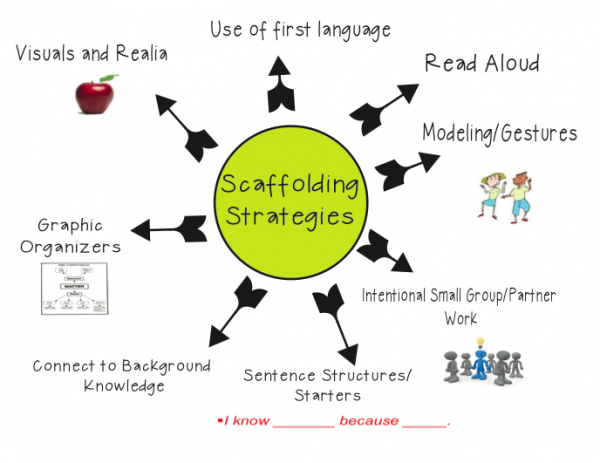
In education scaffolding refers to a process in which teachers model or demonstrate how to a problem and then step back, offering support as needed. Scaffolding could be seen as a teacher providing step by step instructions and gradually enhancing the level of individual work over time.
Saturday, August 25, 2018
Effective Teaching and Learning
Every one of us is both a student and a teacher.
We are at our best when we each teach ourselves what we need to learn.
This week, we explored the question: How can we facilitate and design excellent teaching and learning?
While diving deeper into reading the ins and outs of effective teaching, I came across a few important tips that I thought I should highlight to keep in the back of my mind.
The top ten characteristics of an effective teacher include the following:
1. Clarity
2. Variability
3. Enthusiasm
4. Task Oriented/ Business-like behavior
5. Positive Reinforcement
6. Student Opportunity to Learn
7. Avoided Criticism
8. Structuring Comments
9. Effective Questioning
10. Humor
During class this week, we were asked to create our own top ten characteristics, I found it incredibly interesting that a lot of our characteristics were not far from the readings top ten. I also thought that it was interesting how simple and tangible the top ten characteristics are.
Some of my biggest takeaways from these readings were small little saying, pictures, or quotes that I found incredibly impactful. I never really thought too much into the first days of school and how much they effect our students. I never realized how much of an impact it had on students to know where you came from and what experiences you had prior to being their teacher.
Efficient: Doing things right
Effective: Doing the right things
The effective teacher Affects lives.
References
Wong, R.T. (2009). The first days of school: How to be an effective teacher (4th ed.). Mountain View: Harry K. Wong Publications, Inc.
Week 1: Diving Right In
Well, it is approximately 8:40 pm, the Saturday after the first week of my senior year at Penn State. I made it through week one.
This week, we dove right in to the nitty gritty of how we can become better teachers.
On Wednesday, we taught a random lesson that was given to us, in order to test the waters and see where we are as #PSUAgEd19 in regards to our teaching.
Thursday, we were given the task of presenting a 6 minute presentation to the "school board" which was undergoing budget cuts and looking to cut funding for the Agriculture program.
"Work it Wednesday" brought both gems and opps regarding my teaching at the start of my senior year.
Gems:
1. The activity that I planned for the class period was an appropriate length of time. (We were given a 15 minute time period and I was asking for suggestions on ways to improve my lesson at the end of the 15 minutes.)
2. I engaged my "students" in a group setting while introducing a new topic at the start of the lesson before asking "students" to complete an activity on their own without my assistance.
Opps:
1. While "students" were working independently, I could have played music so that there wasn't awkward silence throughout the lesson.
2. I also could have planned a little bit better when writing things on the board; instead of having students awkwardly watch me as I drew on the board. I also could have planned a little bit better and drew the image on the board prior to the start of my lesson.
3. I also recognized during my lesson that some of the parts of my image were not sequential in my slide show. So I could have double checked my slideshow prior to class in order to ensure that the slides were sequential and made sense.
I walked into my teaching lab on Wednesday feeling fairly put together- which, by the way, is rare for me. During my lesson I felt as though I had not gone deep enough into my lesson and had left my "students" guessing on the test that they were given to prove what they had learned. However, after reading through the comments made regarding my lesson; all of my "students" had mostly positive things to say. The only opportunities for improvement were very minor details such as playing music while students were working independently, or giving students more time to find the answers instead of "giving" the answers.
Lessons will continue to get better.
But until then:

This week, we dove right in to the nitty gritty of how we can become better teachers.
On Wednesday, we taught a random lesson that was given to us, in order to test the waters and see where we are as #PSUAgEd19 in regards to our teaching.
Thursday, we were given the task of presenting a 6 minute presentation to the "school board" which was undergoing budget cuts and looking to cut funding for the Agriculture program.
"Work it Wednesday" brought both gems and opps regarding my teaching at the start of my senior year.
Gems:
1. The activity that I planned for the class period was an appropriate length of time. (We were given a 15 minute time period and I was asking for suggestions on ways to improve my lesson at the end of the 15 minutes.)
2. I engaged my "students" in a group setting while introducing a new topic at the start of the lesson before asking "students" to complete an activity on their own without my assistance.
Opps:
1. While "students" were working independently, I could have played music so that there wasn't awkward silence throughout the lesson.
2. I also could have planned a little bit better when writing things on the board; instead of having students awkwardly watch me as I drew on the board. I also could have planned a little bit better and drew the image on the board prior to the start of my lesson.
3. I also recognized during my lesson that some of the parts of my image were not sequential in my slide show. So I could have double checked my slideshow prior to class in order to ensure that the slides were sequential and made sense.
I walked into my teaching lab on Wednesday feeling fairly put together- which, by the way, is rare for me. During my lesson I felt as though I had not gone deep enough into my lesson and had left my "students" guessing on the test that they were given to prove what they had learned. However, after reading through the comments made regarding my lesson; all of my "students" had mostly positive things to say. The only opportunities for improvement were very minor details such as playing music while students were working independently, or giving students more time to find the answers instead of "giving" the answers.
Lessons will continue to get better.
But until then:

Tuesday, August 14, 2018
What Great Tachers Do Differently: Part 2
Wow!
Summer has flown by and has also been super hectic!
However, here is the latest from my virtual mentoring group and our collaborations regarding What Great Teachers Do Differently Part 2!
Some feedback that I got from my last blog post was to create a google doc in order to collaborate with you all more efficiently! So, here we are!
Chapter 6:
This chapter discusses the importance of having high expectations not only for your students but also for yourself.
Questions:
Is there a such thing as “too” high of an expectation?
No, I don't believe so. This is where the real differentiation comes in. You can't have the same expectation academically for every student but you expect their personal best. Of course, you conduct yourself in a way that you are not only human but show your own high expectations. Sometimes, I've had student come more on board when I tried to show them and failed and we all learned together. It's the personal best and striving for better.
How do I assure myself that I am creating high expectations that are also reasonable and realistic?
I believe you start out with very high expectations of yourself and your students….especially in the basics of classroom management, etc. You make the class content relevant and relatable to their lives….and than have high standards. I believe the problem young teachers get themselves into is they are militant in conveying the concepts but don't provide enough context. Students can dismiss easier this way. In order to survive my first few years teaching I had to provide context or the boys I took over wanted to go back to shooting brads at each other in the shop and run down program I went into. If you show them how it can benefit them and how it relates...it will make a difference.
Chapter 7:
This chapter discusses that teachers are the variable in determining student success. This chapter also discusses that best vs. worst teachers and sending students to the office.
Questions:
How do I make sure that I am not becoming “that teacher” that is always sending students to the office?
You don't need to be if you are fair and you have to be consistent. Establish your rules and regulations from day 1….and then never waver. It will be hard...but as a new and young teacher they will find any way to push you. Stuff students pull with Meagan our newest teacher, students would never try with me with 16 years in. So it's just a game to them, you reduce this stress by being consistent and never crossing the Teacher/friend line. Still to this day, I don't ask personal questions unless a student is in distress...I don't want to know who they are dating. It is a line you can't cross back over. You loose all credibility when that happens. And one thing a new teacher has the least of is credibility for no better reason then you are young. It is too easy to dismiss you and your contributions so be steadfast in your ground rules. You can be caring and compassionate without becoming friends. They will be your friends when they graduate- that's why I have 40-50 friend requests sitting in my box on graduation night. They begin to understand the rules.
What are some good and bad reasons for sending students to the office?
A student consciously disrespected you with mail-intent.
A student swore and called you a name and is being completely disruptive. One of the rules I have in my syllabus is that you will not interfere with someone else's wishes to learn. So if they start to step into this category- they leave.
A student is being dangerous and won't listen to safety protocol. I would make them repeat a safety test before they come back into the shop if they pull something really stupid.
Reasons not to send: you got into a word battle with them because you're having a bad day. Kids will pick up on this and will see it for what it's worth. Don't let something escalate to you need to send a kid as a cop out because your emotions got out of control.
Chapter 8:
This chapter discusses the importance of focusing on students first and colleagues second. The chapter also discusses the three ways that teachers are able to react to last minute situations.
Comments: I think something worth noting here is the “whole vision” concept. I believe you have to be cognizant of the larger picture at all times especially with running a FFA chapter. You have to think about what will this decision do for the larger picture of my program….will it be perceived positively.
And by focusing on students first you also stay up to date in your teaching practices. Kids are always changing and methods needed to reach them need to change.. so this is a way of you know your audience and their needs, you can adapt to be positioned the best.
Chapter 9:
This chapter discusses respecting students day in and day out. It also discusses how you do not have to like every student but you have to at least act like you like them; otherwise, students will not believe that you genuinely care about them.
Questions:
How do you make sure that you are respecting and “acting” as if you like all students without being cheesy and unrealistic?
My favorite teacher of all time, Mr. Ranck, comes to mind here. Every day he in some way shape or form recognized everyone. He'd comment on their shoes, their unorganized bookbag, a new pencil. He'd also ask them questions like...how are you doing? Did the team win last night? What on earth was happening with the Bills last night? He found some way to connect...and in turn validated each person in the room. It doesn't have to be cheesy just validation. I've done this every day since I started and the kids - even the hard ones- come online. It doesn't have to be big things...just little things consistently.
Is sarcasm acceptable in certain situations? Please explain.
Yes, I use an incredible amount of sarcasm. But it is never, ever directed at a student. It's used to laugh at actions...like oh great the switch is broken again...gotta love this modern tech. Or making fun of technology but you can't direct this at a student. Maybe your 4 year seniors who you know and you know their personalities...but then make sure you're never putting them down.
Chapter 10:
This chapter discusses how our attitude sets the tone for our students and for our fellow teachers. It also discusses how perception can become reality; even if you do not know a student or their family, you are able to perceive from others and make that reality.
Questions:
Regarding the Mrs. Smith scenario. Do teachers have certain things that they are legally not allowed to discuss with other people? (Example: HIPPA Violations within medical field)
Yes, you should never discuss names or families. You can't disclose personal info. There are ways to vent without giving info. When asked how you're day is going, you could say “well, it's been interesting so far”. You get a little off you chest but don't dig yourself a professional hole.
As Agriculture Educators, there are going to be some seasons where we need an extra hand or are more stressed out than we normally are. So- how do we avoid showing signs of how stressed we are but still manage to get everything accomplished and maintain a positive attitude?
Lol. Good question. There are going to be times when you can't escape being stressed. Like fundraising time….degree time...speech time. There are times I can't not show how much I'm weathered. And I think as long as you've built a repor with your students and there is a mutual respect, it's ok for them to see you right there in the trenches with them. That doesn't mean your a raving lunatic, but sometimes when they see you like this, they step up and that is a very healthy and teachable moment when you can genuinely thank them for their leadership. They not only saw a need, they stepped up to help.
Chapter 11:
This chapter discusses that some teachers always need to repair and never do, as well as the opposite. The chapter also discusses how to diffuse aggressive parents. I thought this topic was interesting because my supervisors at work have often told me that when dealing with irate parents, sometimes all it takes is a listening ear.
Questions:
Is there ever too much repairing when it comes to students emotionally? Please explain.
I believe you can go overboard. You should match the apology or repair with the level of incident. It is not your job to do the emotional work for the student but help give them tools to navigate. If you do keep giving in, you can become part of an emotional black hole that doesn't serve anyone and only drains you of vital energy.
Is it ever okay to not repair emotions? Please explain.
Without further context, I would say that it would be rude not to at least apologize if someone is hurt from your actions but you mustn't retract enough that you invalidate a consequence. You will have student who are almost addicted to emotional situations and will seek out drama. You can't feed that. There will be a legitimate time to intervene but don't feed the beast.
Comments:
I will say that if you are doing what you're supposed to and being proactive with your teaching, you shouldn't have to worry about irate parents. When a kid acts out and you send them to the office, email parents to convey your story and offer solutions. This way you show you care but the kids story isn't the only one the parents are hearing. If I get an email from a parent on some concern, the second I see any of that behavior, the parents are notified. I find that over communication will sometime quench future issues.
Saturday, July 14, 2018
What Great Teachers Do Differently: Part 1
In preparation for my #PSUAgEd19 student teaching journey, I have been gifted with multiple virtual mentors to guide me in the process. Together, we have decided to dig deeper into the teaching world by selecting the book What Great Teachers Do Differently.


When choosing a book to explore with my virtual mentoring team, this book caught my eye. Throughout my schooling career, there have been multiple teachers whom have stood out to me as great teachers. However, I was never quite sure what the underlying reason for them being great teachers was. I was hoping that this book would help me to discover those things that make great teachers so great and apply these ideas to my own teaching in the high school classroom.
The first thing that caught my attention when reading this book was the very first chapter entitled: It's People, Not Programs. This phrase stood out to me due to the relationship that it shares with my school experiences. Although a school can have the most up-to-date technology, the highest rating programs, if the teachers and staff are not there to back up the programs; the school is nothing. Great teachers/staff = a great school/students.
I believe that I can use this phrase in the Spring while student teaching at Boonsboro High School. Although I will only be a member of the Boonsboro family for a short period of time, my influence on the students can make or break the agriculture program and the school system in general. Going out of state to student teach is a huge undertaking and can be scary not knowing how the school systems are set up. However, I believe that if I take a positive mindset and focus on the person that I am and not the programs that are surrounding me, I can make a positive impact on my students both inside and outside of the classroom (FFA functions, being a part of the community not just "the Ag. teacher".
In chapter 2 of the book, I found another phrase which stood out to me the most. The phrase included, "It's not what you do, its how you do it." This phrase stood out to me because I am pursuing a Special Education minor alongside my Agriculture and Extension Education major. Each student has individual needs, whether they are in the general education setting or not. All students are different and unique, therefore, not every student will "get" the concept that you are teaching right away. You may have to revamp the way that you are presenting the lesson in order to reach a wider audience and/or make students understand the concept more.
I believe that I can utilize this phrase both in the Fall and Spring semesters. In the Fall semester, I believe that this phrase will help me both with my microteaching prior to student teaching as well as throughout my Special Education classes. I also believe that I will be able to utilize this phrase while planning my lessons. I think that this will help me to differentiate my lessons and be open to all types of learners.
Chapter 3 of the book is devoted entirely to expectations and consequences. The chapter discusses in depth the importance of setting up clear expectations from the get-go and following through with consequences. Clear expectations and consequences account for good classroom management. Too many times, I have heard of student teachers entering a classroom and trying to be too friendly with the students. Teachers in general need to keep in mind that students are there to learn and not all of your students are going to like you.
This chapter will definitely be something that I will look back on throughout my time prior to and during student teaching. The hardest part about coming out of college and teaching high school students is the small age gap between the students and teachers. While Agricultural Educators have more than just a "normal teachers" role (FFA Advisor, CDE Coach), we also need to be mindful of being personable and not personal with students.
Chapter 4 dives into the difficult topic of self control. Specifically meaning something when you say it. This chapter also uses a parent/child relationship to reiterate this topic. A blurb that stood out to me included "Great teachers focus on the behavior they expect of their students, not on the consequences for misbehavior." Negative mindsets often destroy students. A teacher's tone of voice often determines the reaction of the student. For example, speaking softly and not directly stating consequences often gets through to students more clearly than yelling and directly stating a consequence.
I know that in my household setting, sometimes I struggle with this concept. If my little brother is misbehaving and I am trying to get a point across; I often find myself yelling. Over the years, I have found that speaking softly and calmly accomplishes more than yelling and acknowledging direct consequences.
Chapter 5 discusses prevention vs. revenge. Effective teachers focus on preventing the misbehavior from happening again whereas less effective teachers focus on the revenge or consequences of the misbehavior. The chapter digs into sending students to the office and a teacher's bag of tricks. I found the Teacher's bag of tricks incredibly helpful. This section describes how to handle misbehavior situations and arguments with students. Every teacher has the same tricks in their bag. The difference is simply who uses which tricks and when.
This chapter is incredibly helpful when dealing with students who simply do not like you as a teacher/person. Students who do not respect you will often be the "problem" students in your classroom. Although, I do not want to generalize any classroom- ever! This chapter digs a little bit deeper into how to handle misbehaviors and being sure to respect yourself, your students, and your students parents.
My mentor team had a lot of great feedback regarding the first part of the book. All of the information was relevant to situations which they have been in. My cooperating teacher was a great mentor when reading the chapter regarding expectations and consequences. I happened to be reading this chapter while attending the Maryland State FFA Convention. Ms. Cashell and I had a deep conversation regarding what it means to be personable with students compared to being personal with students. I intend to use all of the feedback which I received from my mentor team to continue to find ways to use the phrases and stories from within the book and input them into my future classroom.
Subscribe to:
Posts (Atom)